
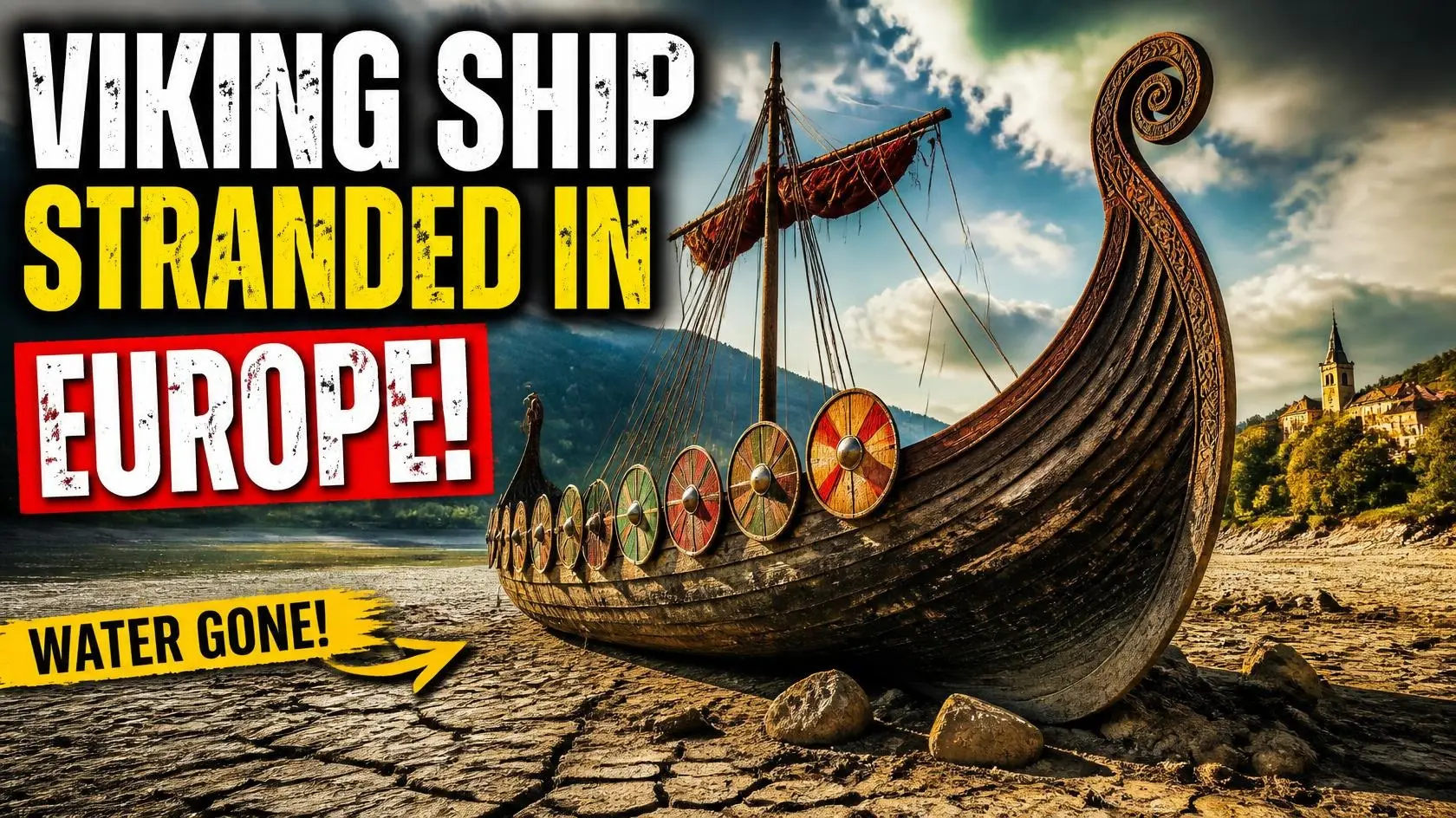
The persistent problem of extremely low water level in Europe has brought out an interesting historical find: a Viking ship found ashore where water used to be before. This is one of the interesting pieces of the historical puzzle, which were buried under the river bottom, and now become the source of fascination for tourists and scientists alike.
This interesting find is not just an illustration of the cultural heritage of Europe but also evidence of the problems of environmental nature that the European continent is facing nowadays.
A Shocking Find
The Viking ship was found when the water level in the water body in Europe reduced, resulting in portions of the ship that were concealed by water coming into sight. Locals noticed strange wooden objects emerging from the river bed before it was determined that the objects were from the ship.
Archaeologists believe that the ship might have served different purposes, such as transportation, trade, or warfare, during the Viking age, which existed around the 8th to the 11th century.
Historians are excited about this find because the well-preserved Viking ships are not many in number. Each new find gives the researchers more knowledge on how Vikings traveled and traded.
Why Did the Ship Emerge at This Point?
The main explanation for the emergence of the ship is the unusually low level of water in various European rivers and lakes.
According to scientists, there are a number of reasons for this phenomenon:
- Long drought periods
- Low levels of precipitation
- Higher than usual temperatures
- Weather changes due to climate
Due to falling water levels, river beds that were under water are now uncovered, exposing various archeological artifacts.
While such discoveries may be exciting, scientists warn about the fact that exposure to air, sun, and temperature changes will cause damage to old wood structures.
The Viking Connection
The Vikings were some of the best sailors in the medieval era. The ships the Vikings possessed enabled them to venture into great lengths across Europe and explore places such as:
- England
- Ireland
- France
- Germany
- Eastern Europe
- Iceland
- Greenland
The excellent shipbuilding skills they had enabled them to sail not only on open waters but also in shallow waters.
The newly discovered boat could reveal a lot about how Vikings traded along the rivers of Europe.
A New Draw for Tourists
The Viking ship has very quickly become something new for tourists who are looking for a historical experience.
Tourists who come to this area are interested in seeing the authentic relic of the Viking Age on its home territory. Unlike in museums, the open ship allows tourists to see how the ship existed in its natural state during hundreds of years under water.
Tourists can watch archaeologists who explore and save the site and also learn about the history of Vikings and changes in the environment which caused the discovery of the ship.
Preservation Issues
While the discovery is amazing, it still causes some problems of preservation.
The wood that spends centuries under water usually is saved from deterioration thanks to lack of oxygen. But once it is uncovered, it starts deteriorating very fast.
Now experts have several tasks to do:
- Document the vessel thoroughly.
- Save the fragile wood parts.
- Prevent the possible theft and vandalism of the site.
- Decide whether the ship should be moved.
- Explore the construction of the vessel and its age.
Experts underline that it is very important to preserve the site carefully.
Climate Change and Uncovered History
This Viking ship discovery has been part of a larger pattern that has emerged throughout Europe in recent times due to droughts. Some of the items that have been discovered include:
- Historic villages
- Bridges from medieval times
- Shipwrecks
- Old river crossings
- Archeological finds
While these findings provide insight into history, they also serve as an indication of the environmental impacts taking place currently.
Scientists have noted that while low levels of water may lead to the discovery of significant historic treasures, they are also a sign of environmental problems.
Questions that Archaeologists Seek Answers To
An extensive study of the object can provide the following answers:
- When was the ship constructed?
- What was the path it followed?
- Was it employed in warfare or commerce?
- Why is the ship underwater?
- What information does its design tell us about Viking engineering?
Modern methods like carbon dating and other advanced forms of archaeology will assist in getting the answers.
Conclusion
The emergence of a Viking ship stuck to land due to the lowering of water levels is an interesting convergence of history, archeology, and environmental shifts. An occurrence that started out as just another strange phenomenon in a river system now presents a unique chance to learn more about the Viking era of Europe.
For tourists, this presents a unique opportunity to see history literally unravel from the soil, while for scientists and historians, it provides new information about one of the most intriguing maritime cultures of the world.
FAQs
Why did people discover the Viking ship on land?
This happened due to very low water levels that uncovered some sections of the riverbed in which the ship had been submerged for hundreds of years.
How old is the Viking ship?
According to experts, the ship belongs to the era of the Vikings that existed between 793 AD and 1066 AD.
Are there any other findings of similar kind?
No. This type of well-preserved ships is rare, making every new finding valuable for studying history.
Can visitors go to the site?
That will depend on local laws and conservation activities, but usually, many people visit these sites.
What can we learn from the discovery?
The discovery can give insights into Viking shipping, trade routes, transportations, shipbuilding and their influence on Europe.